Contact Vicki
If you have any questions or would just like more information please don't hesitate to get in touch by clicking the button below and filling out the contact form.
Contact Vicki

There is no doubt that synthetic oxytocin has its place in maternity care, and can be instrumental in saving lives, but even the companies who develop this synthetic oxytocin state that it should not be used for routine inductions and augmentation of labour unless medically necessary.
For the use of synthetic oxytocin the woman needs to be hooked up to an IV drip with a cannula in her arm, wrist or hand and the synthetic oxytocin is administered at high doses from an automatic pump, while the midwife tracks the baby’s heart rate and the pattern of the mothers contractions.
When you go into natural labour, your body is producing your own natural oxytocin, which triggers the start of contractions. Your body will also start releasing endorphins, which are your body’s natural pain relief hormones, which helps your body to increase the release of oxytocin at the right time, so your labour intensifies and your muscles work really effectively to push baby down and out of your uterus, but at the same time your endorphins, which are your pain relieving hormones are helping you to manage through the gradual intensity of your surges.
Even though synthetic oxytocin has been created in a laboratory by scientists and they have developed it so that it has “the same chemical structure” so it mimics your own oxytocin, the key and most important aspect to remember about synthetic oxytocin is that is hasn’t been created by your brain and it is not released in pulses to create smooth, regular surges of the uterus that increase over time.
Synthetic oxytocin also doesn’t feed back to your brain like your own oxytocin, where it then provides pain relief as your surges become more intense. It does not cross the blood-brain barrier so it is only working on the muscles of the uterus, so you do not get that cocktail of hormones working together.
Because the oxytocin is synthetic and not released by your own body, women find that the contractions can become quite intense and painful quickly, and they are not given a break in between each contraction, they just keep coming one after the other.
This is when you are more likely to ask for pain relief or epidural.

Because your medical caregivers do not know how the synthetic oxytocin will affect you or your baby, it will be hospital policy that you are required to have constant foetal and maternal monitoring, because it is known that synthetic oxytocin causes stronger contractions, which will reduce blood and oxygen supply to some extent to your baby, which can then cause hypoxia (low oxygen).
There are risks involved with induction and augmentation using Syntocinon (or synthetic oxytocin) so I have included the “Patient Information Leaflet” by the pharmaceutical company who makes it for you to read at the bottom of the page.
THERE’S AN INTRUDER IN YOUR BODY
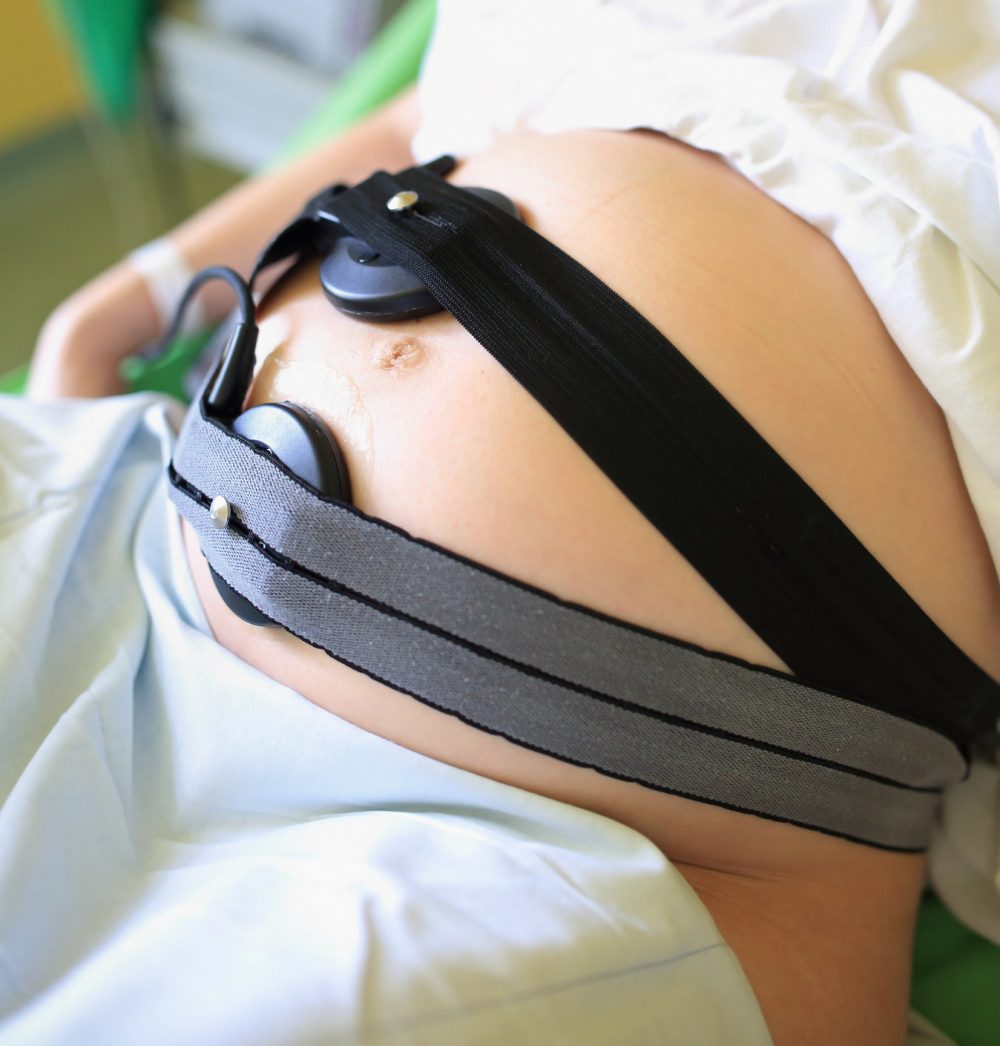
With monitoring always ask for the Monica Novii Bluetooth monitoring, which gives you so much more freedom to move around without straps and flat discs that are supposed to sit firmly on a round belly. If the Monica Novii is not available then ask for the wireless monitoring (telemetry / battery operated) which is kind of an oxymoron, because you still have the two thick elastic straps and discs around your belly, but you are not restricted by the cord attached to the monitoring device so at least you can move around and get into the shower. Even using this “wireless” monitoring, women report feeling frustrated and uncomfortable having the two straps around their belly, and the constant fiddling by the midwife to ensure the disks are placed in the right position, especially when you move or baby moves, which can affect the trace.
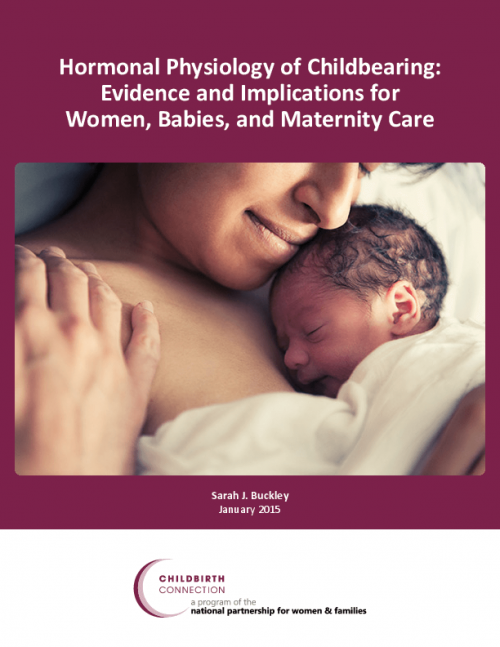
Dr Sarah Buckley, who is one of the world’s leading researchers when it comes to the hormonal physiology of labour and birth, has compiled a really helpful article about how synthetic oxytocin affects labour and birth – CLICK HERE.
Synthetic Oxytocin Benefits
It is important to recognise that every woman is an individual and may have different side effects or benefits to the use of synthetic oxytocin. Some of the benefits we know are:
Synthetic Oxytocin Risks
FURTHER RISKS & BENEFITS INFORMATION ON SYNTOCINON – CLICK HERE
This is the information insert found in the packaging of the Syntocinon that all women should read prior to receiving this.
PATIENT INFORMATION LEAFLET – RISKS & BENEFITS – CLICK HERE
Here are the RANZCOG Guidelines for induction of labour in Australian and New Zealand:
OTHER INDUCTION METHODS
Stretch & Sweep – CLICK HERE
Prostaglandin Gels – CLICK HERE
Balloon Catheter (Foley’s or Cook’s) – CLICK HERE
Artificial Rupture of Membranes (AROM) – CLICK HERE
Hypnobirthing Classes Perth – CLICK HERE
If you have any questions or would just like more information please don't hesitate to get in touch by clicking the button below and filling out the contact form.
Contact Vicki